
Your mortgage can affect retirement by determining how much of your income goes toward housing, when your mortgage is scheduled to be paid off, and how much home equity you can access later in life. Reviewing amortization, renewal options, prepayment privileges and refinancing decisions before retirement can help you align your mortgage with your broader financial plan. That review is what mortgage retirement planning in Canada looks like in practice. The mortgage you choose today can shape the payments and debt you carry into your 60s and beyond. Most people treat the mortgage file and the retirement file as two separate things. They are closer to the same file than most of us admit. A Royal LePage survey released in May 2025 found that 29% of Canadians planning to retire within the next two years say they will carry a mortgage into retirement. Statistics Canada figures show mortgage balances grew fastest among the 55 to 64 age group in 2025, up 6.0% year over year. That shift usually traces back to choices made ten or fifteen years earlier. Your Mortgage Is a Retirement Plan You Signed Without Reading Every mortgage has a finish line built into it. Pick a 30 year amortization at 38 and you have quietly scheduled your final payment for age 68. Nobody says it out loud at the signing table, but that is the arrangement. Retirement income is usually lower and less flexible than employment income. CPP, OAS, a workplace pension, and RRIF withdrawals do not stretch the way a paycheque does. A payment that felt comfortable during your peak earning years can feel very different once the T4 stops. Three things worth pinning down early: The calendar year your current amortization runs out Your target retirement year and the income you expect then How much of your net worth sits in home equity versus registered savings This is the same conversation I have with first-time home buyers who are 29 and cannot picture 65 yet. Amortization Can Shape Your Retirement Timeline Amortization is the biggest lever most borrowers have, and the one they think about least. Stretching from 25 years to 30 drops the payment and improves qualifying room. It also pushes the scheduled payoff five years further into your life. Since December 15, 2024, eligible first-time homebuyers and buyers of new builds have been able to access insured mortgages with amortizations of up to 30 years, subject to the applicable eligibility and mortgage-insurance rules. The insured home price cap also increased to $1.5 million. Both changes helped affordability at the front end, and both mean a cohort of buyers now has a scheduled payoff date sitting squarely in their sixties. A Quick Look at the Numbers Take a $600,000 mortgage at 4.49%, compounded semi-annually the Canadian way: 25 year amortization: roughly $3,318 per month 30 year amortization: roughly $3,022 per month Monthly savings: about $296 Extra interest over the full run: roughly $92,600 Payoff pushed back: five full years That $296 buys real breathing room today. Whether it is worth $92,600 and five more years of payments depends on what else you do with the money. Run your own numbers through the mortgage calculators first. Fixed vs. Variable The fixed versus variable debate usually gets argued over a five year horizon. Over a 25 or 30 year run, the question changes shape. What matters is how much payment volatility your household can absorb at each life stage. Variable mortgages can offer lower rates at certain points in the rate cycle, but they also expose borrowers to greater payment or interest-rate uncertainty. The Bank of Canada policy rate sits at 2.25% as of August 2026, and prime moves with it. A borrower at 35 with two incomes can usually ride out a rate cycle in a way a borrower at 58 often cannot. Rough guidance I use with clients, subject to lender qualification and approval: Long runway and a cash buffer: variable may be worth considering Retirement date within one or two terms: fixed often brings more certainty Planning to downsize mid-term: check portability and penalty structure first Tight cash flow, no buffer: payment certainty usually wins Every Renewal Is a Fork in the Road For borrowers who keep a mortgage for several decades, each renewal can be another opportunity to review the amortization, payment schedule and lender. Every one of those reviews is a chance to shorten the amortization or move to a lender that fits your situation better. Automatically accepting the first renewal offer can mean missing an opportunity to compare your options. Renewal got easier in November 2024, when OSFI stopped requiring the prescribed minimum qualifying rate on straight switches of uninsured mortgages to another federally regulated lender. In plain terms, an eligible uninsured straight switch may no longer require qualification using OSFI’s prescribed minimum qualifying rate, provided the loan amount and amortization do not increase. Your new lender still underwrites the file, but that change removed a real barrier for older borrowers whose income has shifted. Set a mortgage renewal reminder so the date does not sneak up on you, then ask three things: Can I shorten the amortization back to where it was, or shorter? Does accelerated bi-weekly fit my pay schedule? Would another lender save me more than the switch costs? Refinancing Before Retirement: Helpful or Costly Refinancing resets the clock, and that cuts both ways. Pulling equity out to renovate, consolidate, or help an adult child usually re-amortizes the balance over a fresh 25 or 30 years. Done at 55, that can mean payments until 85. CMHC’s 2025 Mortgage Consumer Survey found that 41% of first-time buyers used gifts or inheritance toward their down payment, with financial gifts averaging $74,570. For parents considering helping an adult child buy a home, it is worth examining what raising those funds from home equity could do to their own mortgage and retirement timeline. Helping is a generous move, and it still deserves that hard look. When a Refinance Still Makes… Continue reading How Your Mortgage Choice Today Affects Retirement

Category: blog
Mortgage Broker vs Bank in Canada: Comparing Rates, Options & Approval
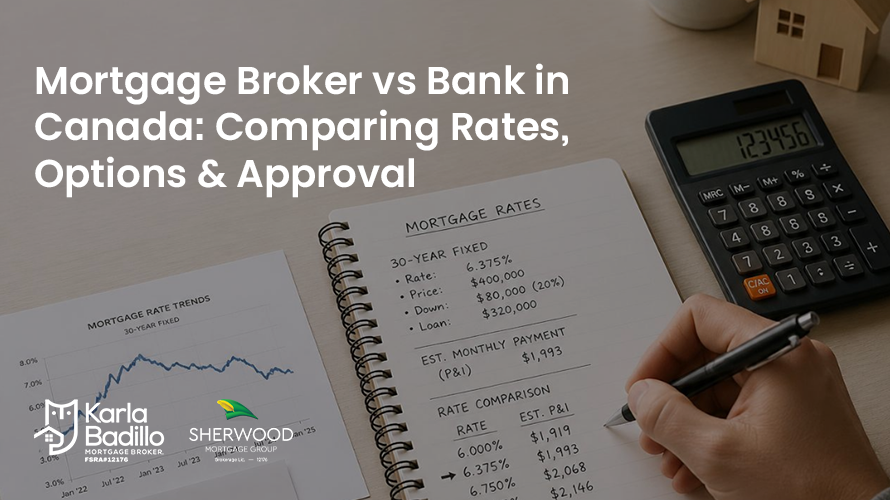
A mortgage broker in Canada will often get you a better rate than a bank, because a broker shops your application across many lenders while a bank branch can only quote from its own shelf. Banks price to protect the margin on clients they already have. Brokers price to win the deal, and that is a different starting point. The gap is not automatic and it is not always dramatic. A strong borrower with a long branch relationship can sometimes get a sharp exception rate without leaving the building. The better question is which channel puts your particular file in front of the most lenders, and for most Canadians, that is a licensed independent mortgage broker in Ontario. Understanding Mortgage Broker vs Bank A mortgage broker is an independent licensed professional who submits your file to several lenders and brings back competing offers. A bank employee works for one lender and sells that lender’s products. Both are regulated and both can be excellent, but only one of them can walk away from a lender who says no. The practical difference shows up in three places: how many lenders see your file, how flexible the products are, and what happens when your situation is not textbook. Self-employed income, rental income, bruised credit, and a short employment history all get read differently from one lender to the next. That is the thinking behind a phrase most brokers live by, which is that one lender’s no is not the final answer. Lender access: A broker may work with chartered banks, monoline lenders, credit unions, trust companies, and private lenders. A branch offers one product shelf. Cost to you: On standard residential deals the lender usually pays the broker, so there is typically no direct fee to you. Bank compensation is already built into the quoted rate. Credit inquiries: In many cases, a broker can use a single credit report when submitting your application to multiple lenders, reducing the need for separate credit pulls. Ask your broker how your application will be submitted. Product depth: A lenders, B lenders, and private options can all be discussed in one conversation. Advice: A broker is not carrying internal sales targets on chequing accounts, credit cards, or mutual funds. What a Mortgage Broker Actually Does A licensed broker gathers your income, credit, and property documents, then packages that file the way each individual lender wants to read it. Presentation matters far more than most borrowers expect. Two nearly identical applications can get two different answers depending on how the income is explained and which underwriter receives it. From there the broker negotiates rate and terms, requests exceptions when the file supports one, and manages the paperwork through to funding. A good broker will also tell you which products to avoid, not just which one has the lowest number on the page. You can read more about Karla Badillo’s background and industry experience on the About Karla Badillo page. How Mortgage Brokers Get Paid in Canada On most standard residential mortgages, the lender pays the broker a finder’s fee once the deal funds. That fee does not come out of your down payment and is not tacked onto your rate. It is an acquisition cost the lender would otherwise spend on branch staff, rent, and advertising. Fees can apply on alternative or private deals, and a licensed broker must disclose them to you in writing before you commit to anything. Ontario mortgage brokerages are licensed and supervised by the Financial Services Regulatory Authority of Ontario, which sets the disclosure and suitability standards brokers work under. Ask for the fee disclosure early so nothing surprises you at the lawyer’s office. What Your Bank Offers, and Where It Comes Up Short Banks are convenient, familiar, and genuinely fast on straightforward files. If your income is salaried, your credit is clean, and you have twenty percent down, a branch may approve you in days. Relationship pricing is real too, especially for clients holding significant deposits or investments at the same institution. The limits appear the moment your file needs flexibility. A branch advisor works from a discount grid with limited discretion, and once you fall outside it the answer is usually a decline rather than a referral to a lender who would say yes. Borrowers turned away at a branch often still find a workable path through alternative lenders or private mortgages, subject to lender qualification and approval. The Renewal Letter Problem Most Canadians renew by signing the letter their bank mails out before the term ends. That letter rarely holds the sharpest rate the same bank would hand a new client at the door. Lenders count on inertia, and inertia usually wins. Since late November 2024, borrowers switching an uninsured mortgage to a new federally regulated lender at renewal, without increasing the balance or extending the amortization, are generally exempt from qualifying again under the stress test. That single change removed a real barrier to shopping for your renewal. Running your numbers first with the mortgage renewal tool takes a few minutes and can be worth considerably more than that. Where the Rate Difference Actually Shows Up The headline gap between broker and branch pricing is often modest, sometimes fifteen to thirty basis points on a five-year fixed. On a $600,000 mortgage, twenty basis points is roughly $1,200 in extra interest per year. Stretch that across a full term and small numbers stop looking small. The bigger difference is usually in qualification rather than the quoted rate. A broker may place a file with a lender who accepts your income structure at ordinary A pricing, while a branch pushes that same borrower toward a costlier product or declines outright. The rate matters, but the rate you actually qualify for matters more. Monoline lenders often price aggressively because they carry no branch network to fund. Credit unions are provincially regulated and can apply their own qualification rules. Some lenders discount a specific term, such as the three-year fixed, to hit… Continue reading Mortgage Broker vs Bank in Canada: Comparing Rates, Options & Approval
Understanding Down Payment Documentation for Home Buyers in Canada
When purchasing a home in Canada, it’s essential to understand the documentation requirements for your down payment. Due to Anti-Money Laundering (AML) policies, you must demonstrate the source of your down payment funds for a period of 90 days. In this article, we’ll explain what documents you need and how to streamline the process. What Documentation Do You Need? To meet the 90-day requirement, you can provide the following document: Three months of bank or investment statements showing the history of your funds. Confirming the Source of Your Funds Proving where your down payment money comes from can be straightforward or frustrating. Lenders look for a clear history of all funds in your accounts, and they are strict about verifying the source of the down payment due to anti-money laundering regulations. All lenders, including banks, credit unions, and trust companies, must properly document the origin of your funds. This includes providing proof of 100% of the down payment and closing costs over a 90-day period. Understanding these requirements will help simplify the process for you and your mortgage broker. Closing Costs In addition to your down payment, you should demonstrate at least 1.5% of the purchase price for closing costs (such as land transfer tax, legal fees, and mortgage registration). This percentage does not reflect your actual closing costs, which can vary significantly. Required Documentation Lenders will ask for bank statements covering a 90-day period. If you have large deposits (of $1,000 or more), you will likely need to justify their source. For example, if your statement shows a transfer of $5,000, you must provide a 90-day history from the originating account to clarify the funds’ origin. Small DepositsDeposits under $1,000 often go unnoticed, but lenders may still inquire about them. If there are multiple small deposits, you’ll need to explain their origin. For instance, receiving $200 every day for 20 days could be seen as unusual. Common Documents for Down Payments Bank Statements with Your Savings: If you’re using personal savings for your down payment, you’ll need to provide bank statements covering the last 90 days that clearly reflect your savings. This will help demonstrate the consistency and origin of your funds. RRSP: If you’re using your RRSP for the down payment, you’ll need to provide a 90-day history of your RRSP statements along with documentation for any deposits. Property Sale: If your down payment comes from selling a property, you’ll need to submit a copy of the accepted offer for the sold home and a breakdown of the received funds. Gifts: If you receive a gift from a family member, the donor must complete a gift form, and you’ll need to show a statement evidencing the deposit. Buying New Constructions If you purchased a new construction, you likely paid a substantial portion of your down payment to the builder before the 90-day period. In this case, you’ll need to present copies of the checks issued to the builder and a receipt confirming the payment. Unacceptable Down Payment Sources Lenders do not accept certain types of funds for down payments, such as: Gifts from non-immediate family members. Loans from friends or family. Cash kept “under the mattress.” Understanding the documentation requirements for your down payment is crucial for facilitating your home purchase in Canada. While the process may seem complex, with proper preparation, you can navigate it with confidence. If you have more questions or need assistance, please feel free to reach out. I’m here to help you every step of the way!
How to Start Building Credit to Buy Your First Home

If buying a home is one of your future goals, building strong credit is a crucial step in the process. A good credit score not only improves your chances of getting approved for a mortgage but can also help secure better interest rates and loan terms. But how do you start building credit when your primary goal is to eventually buy a house? Let’s break it down. Why is Credit Important When Buying a Home? Lenders rely heavily on your credit score to evaluate your ability to manage debt responsibly. When applying for a mortgage, a strong credit score tells lenders that you’re a reliable borrower. This makes you more likely to be approved and could also result in more favorable loan terms. Conversely, poor credit could mean higher interest rates or even being denied a mortgage altogether. Starting to build your credit early, even before you’re actively looking for a home, can set you up for success when you’re ready to take the leap. Steps to Build Credit for Homeownership Open a Secured Credit Card or Low-Limit CardIf you’re starting from scratch, a secured credit card can be a great way to begin. These cards require a deposit, which serves as your credit limit. Using this card responsibly by making small purchases and paying off the balance on time will help establish your credit history. After several months of responsible use, you may be eligible for an unsecured credit card with better terms. Take Out a Small LoanAnother way to start building credit is by taking out a small personal loan. This could be a loan for a small purchase like furniture or a vehicle. Even though it’s not a mortgage, showing that you can handle loan payments responsibly will reflect positively on your credit history when it’s time to apply for a home loan. Stay Consistent with Monthly PaymentsOnce you’ve opened credit accounts, the most important thing is to make your payments on time, every time. Set up automatic payments or reminders to avoid missed or late payments, which can quickly damage your score. Payment history makes up a large portion of your credit score, so consistency here is key. How Long Does It Take to Build Credit for a Mortgage? Building credit takes time, so starting early is essential. Ideally, you should begin establishing credit at least a year before you plan to apply for a mortgage. Lenders want to see a history of responsible credit use, which usually means six months to a year of on-time payments. The longer you maintain positive credit habits, the stronger your score will become. Starting to build credit now can set you up for success when it’s time to buy your first home. By following these steps and maintaining good financial habits, you’ll be ready to navigate the mortgage process with confidence. If you have any questions or are ready to start exploring your mortgage options, don’t hesitate to reach out—I’m here to help you through every step of the journey toward homeownership! Karla Badillo – Sherwood Mortgage Group Brokerage 12176
Improve Your Credit Score: Tips for Mortgage Success

A good credit score is crucial when applying for a mortgage. It can influence the interest rates you’re offered and the terms of your loan, making a significant difference in your monthly payments and overall loan costs. Improving your credit score can enhance your chances of approval and help you secure more favorable mortgage terms. Here are some key tips to help you boost your credit score. 1. Always Pay on Time Payment history is a major factor in your credit score. Late or missed payments can negatively impact your score. To stay on track, set up automatic payments or reminders to ensure you never miss a due date. 2. Keep Your Credit Utilization Low Credit utilization refers to the ratio of your credit card balances to your total credit limits. It’s advisable to keep this ratio below 50%. For instance, if your total credit limit is $10,000, aim to use no more than $5,000 at any given time. 3. Don’t Apply for Too Much Credit at Once Each new credit application triggers a “hard inquiry” on your credit report. While one or two inquiries might not have a significant impact, multiple applications can suggest financial instability and potentially lower your score. 4. Diversify Your Credit Types Having a mix of different types of credit, such as credit cards and installment loans, can be beneficial. It demonstrates your ability to handle various forms of credit responsibly. However, only apply for credit types that suit your financial needs. 5. Keep Old Credit Accounts Open The length of your credit history contributes to your score. Keeping older accounts open can positively affect your score, as they reflect a longer period of responsible credit use. 6. Regularly Check Your Credit Report for Errors Errors on your credit report can hurt your score. Review your report regularly to catch any inaccuracies. If you find mistakes, contact the credit bureau to correct them promptly. 7. Avoid Closing Accounts After Paying Them Off Paying off a credit card is a great step, but closing the account can decrease your overall credit limit, which may increase your credit utilization ratio. Keeping the account open and using it occasionally can help maintain a lower utilization rate. 8. Settle Any Outstanding Debts If you have unpaid debts, especially those in collections, work on resolving them. Addressing these debts can gradually improve your credit score and show lenders that you’re managing your finances responsibly. 9. Use Credit Monitoring Tools Many financial institutions offer credit monitoring services that allow you to track changes to your credit score. These tools can provide valuable insights and help you stay informed about your credit health. 10. Be Patient Improving your credit score takes time. Consistently practicing good financial habits will gradually enhance your score, leading to better mortgage terms and financial opportunities. A solid credit score is important for getting favorable mortgage rates and terms. By following these tips, you can improve your credit score and increase your chances of a successful mortgage application. Start with small steps and stay committed to enhancing your financial health. Karla Badillo – Sherwood Mortgage Group Brokerage 12176
Pros and Cons of Investing in Pre-Construction Properties in Canada

Investing in pre-construction properties can be a lucrative opportunity for those looking to grow their real estate portfolio in Canada. However, it’s essential to weigh the benefits against the potential drawbacks. Here’s a look at the key pros and cons of investing in pre-construction properties. Pros of Investing in Pre-Construction Properties Appreciation Potential: Pre-construction properties often appreciate in value by the time they are completed, providing investors with a profitable return on their investment. Flexible Payment Plans: Developers often offer staggered payment plans, which can ease the financial burden by allowing investors to spread payments over the construction period. For example, instead of needing the full 20% down payment upfront, this amount is typically spaced out over time. No Immediate Mortgage Payments: Unlike resale properties, where you need to start mortgage payments immediately, with pre-construction, you don’t need a mortgage until the building is complete. This allows investors to keep their debt low and potentially invest in other opportunities during the construction period. Opportunity for Assignment Sales: One strategy investors use is to sell their contract before the building is completed, known as an assignment sale. This allows them to benefit from several years of appreciation without ever having to take out a mortgage or pay closing costs. Potential for High Profits: Early investors can benefit from lower initial prices. As the project progresses, the value of the property often increases, leading to significant potential profits. However, it’s important to remember that this is typically a long-term investment strategy, not a quick flip. Cons of Investing in Pre-Construction Properties Market Uncertainty: While there is potential for appreciation, there is also the risk that market conditions could change, leaving the property valued lower than expected upon completion. Higher Interest Rates: Investment properties generally come with higher interest rates compared to primary residences, which can reduce overall profitability. Construction Delays: Delays are common in pre-construction projects, which can push back the timeline for when the property can be rented or sold, affecting cash flow. Higher Closing Costs: Pre-construction properties often have higher closing costs, including development charges and other fees, which can eat into potential profits. Delayed Income: Unlike ready-to-rent properties, pre-construction investments do not generate income until the project is completed, requiring investors to wait before seeing returns. Investing in pre-construction properties in Canada offers exciting opportunities for appreciation and customization. However, it’s important to consider the potential risks, such as higher interest rates, construction delays, and market fluctuations. Carefully evaluating these factors will help you determine if pre-construction investment aligns with your financial goals. For more insights and personalized advice on real estate investments, feel free to reach out. Karla Badillo – Sherwood Mortgage Group Brokerage 12176
Considering a Pre-Construction Home for Your Primary Residence? Here’s What You Need to Know

If you’re considering buying a home as your primary residence, a pre-construction property can be an attractive option. However, as with any major real estate decision, it’s crucial to weigh both the benefits and considerations before making a final choice. Here’s a guide to help you make informed decisions and plan for your new home in Canada. Benefits of Purchasing a Pre-Construction Property Customization and Personalization One of the major advantages of buying a pre-construction home is the ability to customize and personalize your living space. From selecting finishes and fixtures to choosing colors and layouts, you can tailor the home to fit your style and preferences. This level of personalization ensures that your new home aligns perfectly with your vision. Potential Incentives Developers often offer attractive incentives to encourage early sales of pre-construction properties. These incentives might include free upgrades on flooring, cabinetry, and appliances. Sometimes, developers also offer perks like discounted assignment fees or complimentary parking spaces. Taking advantage of these offers can add significant value to your purchase. Extended Payment Structure With pre-construction homes, the payment schedule is typically spread out over the construction period, which can ease financial planning. Instead of paying a large sum upfront, you’ll make incremental payments, allowing you more time to manage your finances and potentially save additional funds. 4. Brand-New Home Buying a pre-construction property means you’ll be the first person to live in the home. Enjoy the benefits of modern construction, contemporary design, and the latest technology. Additionally, in Ontario, new home buyers benefit from the Tarion warranty, which provides protection against construction defects and ensures quality standards. 5. Lower Competition In a competitive housing market, pre-construction homes can offer a less intense buying experience compared to existing properties. With fewer bidding wars and competition, you might find it easier to secure your ideal home without the stress of multiple offers. Considerations When Buying Pre-Construction Financial Planning Pre-construction homes require a different financial approach. Typically, the down payment is spread over the construction period, but you’ll need to prepare for additional costs such as potential increases in interest rates by the time the property is completed. It’s essential to plan for these financial variables and build a budget that accommodates potential changes. Interest Rate Risks Since you won’t finalize your mortgage until the construction is complete, there’s a risk that interest rates may rise between your initial deposit and the closing date. This fluctuation can impact your monthly mortgage payments, so it’s important to consider potential interest rate changes when planning your budget. Higher Closing Costs Closing costs for pre-construction homes can be higher than those for existing properties. This includes additional fees related to the development, registration, and potential extra charges from the builder. Be sure to account for these increased costs in your financial planning to avoid surprises at closing. Sales Tax Depending on your location, you may be required to pay HST or GST upon closing. Although you might be eligible for government rebates, you will need to cover these costs upfront and apply for refunds later. Delays and Risks Pre-construction projects can sometimes face delays or cancellations. It’s crucial to research the reputation of the builder and understand the terms of your agreement, including any clauses related to delays or compensation. Ensure that you have a clear understanding of what happens if there are significant delays in the construction timeline. Buying a pre-construction home offers many benefits, from customization to potential incentives. However, it’s important to carefully consider the financial implications, potential risks, and ensure you select a trustworthy builder. By planning thoughtfully and understanding the process, you can make an informed decision and look forward to moving into your new home in Canada. Need more information or assistance with your pre-construction purchase? Contact me today to discuss your options and make your dream home a reality. Karla Badillo – Sherwood Mortgage Group Brokerage 12176
Pre-Qualification vs. Pre-Approval: What’s the Difference?

Before diving into your home search, it’s crucial to understand the steps involved in securing a mortgage. Knowing these details can significantly impact your home buying experience. In this article, we’ll break down two essential terms often confused by homebuyers: pre-qualification and pre-approval for a mortgage. While both are important steps in the home-buying process, they have key differences that can affect your success and how you approach your search. What are Pre-Qualification and Pre-Approval? Pre-Qualification: Pre-qualification is an initial step to estimate how much you might be able to borrow. This process involves a preliminary assessment based on the information you provide about your income, assets, and debts. It doesn’t require a thorough verification or credit check. Advantages of Pre-Qualification: Gives you a rough idea of the amount you could potentially finance. Quick and easy to obtain, often done through an online assessment or over the phone. Use my app to get pre-qualified in just a few minutes, and start exploring your options today! Click here Pre-Approval: Pre-approval is a more detailed and formal process. It includes a full credit check and a thorough review of your financial documents, such as proof of income, assets, and debts. This gives you a clearer picture of your borrowing capacity. Advantages of Pre-Approval: Provides a more accurate figure of how much you can borrow. Shows sellers that you are a serious buyer, which can speed up the approval process. Contact me directly, and I’ll help you get pre-approved, giving you a competitive edge in this market. Click here Comparison: Pre-Qualification vs. Pre-Approval When Should You Get Pre-Qualification and Pre-Approval? Pre-Qualification: Best at the start of your home search to get a general idea of your budget. Pre-Approval: Recommended when you are more committed to buying. This provides a competitive edge in the market and is usually done within the 3 months leading up to your purchase. Both pre-qualification and pre-approval are crucial steps in the home-buying journey. While pre-qualification offers an initial estimate, pre-approval provides a more precise and formal evaluation that can strengthen your offer and streamline the buying process. Ready to take the next step toward your new home? Use my app for a quick pre-qualification, and when you’re ready, contact me for a personalized pre-approval. Let’s turn your homeownership dreams into reality! Karla Badillo – Sherwood Mortgage Group Brokerage 12176
Collateral Charge vs. Standard Charge: Which Mortgage Option is Best for You?

When exploring mortgage options in Canada, it’s essential to understand the different types of charges that can be registered against your property. Two common types are the standard charge and the collateral charge. While both provide security for your loan, they have distinct features that can impact your financial flexibility and long-term costs. What’s the Difference Between a Charge and a Penalty? When it comes to mortgages, understanding the difference between a charge and a penalty is crucial. A charge refers to the lender’s legal right to claim the property as collateral if the borrower fails to meet their mortgage obligations. It secures the lender’s interest in the property, ensuring they can recover the loan amount if needed. There are two main types of charges: standard and collateral, each offering different levels of protection and flexibility. On the other hand, a penalty is a fee that the borrower might face for violating certain terms of the mortgage agreement, such as paying off the mortgage early or missing a payment. While a charge secures the lender’s ability to recover the loan amount, a penalty is a financial consequence imposed on the borrower for specific actions or breaches. What is a Standard Charge? A standard charge is the traditional type of mortgage charge. This charge is registered for the exact amount of your mortgage loan. For example, if you buy a house for $500,000 with a 20% down payment ($100,000), your mortgage would be $400,000, and that’s the amount registered against the property. Advantage of a Standard Charge: Ease of Transfer: You can transfer your mortgage to another lender without significant costs at the end of your term. Refinancing Flexibility: If you need additional funds in the future, you can refinance and register a new charge. Disadvantage of a Standard Charge: Requalification Process: If you want to increase your loan amount, you’ll need to requalify and may incur legal and administrative costs. What is a Collateral Charge? A collateral charge offers more flexibility by being registered for up to 125% of your property’s value. For instance, if your house is worth $500,000, the charge could be up to $625,000, even if you only need a $400,000 mortgage. Advantage of a Collateral Charge: Access to Additional Funds: You can tap into extra money in the future without needing to register a new charge or incur additional legal fees. Debt Consolidation: You can consolidate various debts under a single loan, using your property as collateral. Disadvantage of a Collateral Charge: Transfer Challenges: Switching lenders at the end of your term can be costly and complicated. Limited Access to Additional Financing: If you already have a high collateral charge, obtaining a second loan or additional credit can be difficult. How Do Collateral Charge and Standard Charge Protect the Lender? Both collateral charge and standard charge protect the lender by ensuring they have a legal claim on your property if you default on your mortgage. Here’s how each works: Standard Charge: Recovery Guarantee: The standard charge ensures the lender has the legal right to recover the loan amount. If you fail to make payments, the lender can sell the property to recoup the loan amount. Specific Amount: The lender is only protected for the amount you borrowed. For example, if you borrowed $400,000, the lender can only claim that amount (plus interest and costs) if you default. Collateral Charge: Greater Flexibility for the Lender: The collateral charge is registered for a higher amount than your initial loan. This means the lender can claim a larger sum if you default, even if you borrow more money in the future. Extended Protection: Since a collateral charge can include other credit products (like lines of credit or personal loans), the lender can use the property to recover these amounts as well. This provides broader protection against your total debt with the lender. Both collateral charge and standard charge offer protection for the lender if you don’t repay your mortgage, but the collateral charge provides additional security by covering higher or additional amounts. The standard charge is more straightforward and easier to transfer, while the collateral charge offers greater flexibility for accessing extra funds and consolidating debts. Consider your current and future needs and consult with a mortgage broker to choose the option that best suits your situation. Karla Badillo – Sherwood Mortgage Group Brokerage 12176
Should You Extend Your Mortgage Amortization at Renewal?

When your mortgage renewal approaches, it’s a perfect time to reassess your financial goals and evaluate the best strategy for your home loan. One option to consider is stretching your mortgage term. But is this the right choice for you? What Does Stretching Your Mortgage Mean? Stretching your mortgage term involves extending the length of your mortgage repayment period. For example, if you initially had a 25-year mortgage term and you’ve been paying it for 5 years, at renewal, you might choose to extend the remaining 20 years back to 25 years or even longer. This strategy can lower your monthly payments, providing more cash flow for other expenses or investments. Benefits of Stretching Your Mortgage Lower Monthly Payments: By extending your mortgage term, you can significantly reduce your monthly mortgage payments. This can ease financial pressure and free up funds for other priorities such as savings, investments, or unexpected expenses. Improved Cash Flow: Lower monthly payments can improve your overall cash flow, giving you more flexibility in managing your household budget. This can be particularly beneficial if you anticipate changes in your income or expenses. Increased Financial Flexibility: Stretching your mortgage can provide you with the financial breathing room to make other investments, pay down high-interest debt, or save for future goals such as retirement or education. Potential Drawbacks Increased Total Interest Costs: Extending your mortgage term means you’ll pay more interest over the life of the loan. This is an important factor to consider, as the longer you take to pay off your mortgage, the more you’ll end up paying in interest. Delayed Mortgage Freedom: Stretching your mortgage term delays the point at which you’ll be mortgage-free. If your goal is to own your home outright as soon as possible, extending the term might not align with your financial objectives. Risk of Changing Interest Rates: If you stretch your mortgage term, you might be exposed to changes in interest rates over a longer period. If rates rise, your overall borrowing costs could increase, even if your monthly payments remain manageable in the short term. Factors to Consider Current Financial Situation: Assess your current financial health. If you’re experiencing financial strain or foresee potential financial challenges, stretching your mortgage term could provide immediate relief. However, if you’re in a stable or improving financial position, it might be more beneficial to maintain or even shorten your mortgage term. Long-Term Financial Goals: Consider your long-term financial goals and how stretching your mortgage fits into your overall plan. If your priority is to minimize debt and achieve mortgage freedom quickly, extending your term might not be the best choice. Interest Rate Environment: Evaluate the current and projected interest rate environment. If rates are low, locking in a longer term could be advantageous. Conversely, if rates are expected to rise, you might want to consider a shorter term to minimize long-term interest costs. Deciding whether to stretch your mortgage at renewal is a significant decision that requires careful consideration of your financial situation and long-term goals. While extending your mortgage term can provide immediate financial relief and improved cash flow, it also comes with potential drawbacks such as increased total interest costs and delayed mortgage freedom. Before making a decision, consult with a Mortgage Broker who can provide personalized advice based on your unique circumstances. By thoroughly evaluating your options, you can make an informed choice that aligns with your financial objectives and sets you on the path to achieving your homeownership goals. If you have questions or need personalized advice, feel free to contact me to discuss your options. Together, we can find the best mortgage strategy for your needs.