

A legal basement suite can help you qualify for a bigger home in the GTA, because many lenders will count part of the expected rent as income on your mortgage application. That extra income may raise the price range you can be approved for, sometimes by a meaningful amount. The catch is that the suite usually has to be legal, self contained and properly documented.
For plenty of buyers in Toronto, Mississauga, Brampton and Durham, the “mortgage helper” is what turns a detached house or a semi into a realistic target instead of another condo. Still, every lender treats rental income a little differently, and those differences can shift your approval in a big way. Working with an experienced mortgage broker in Toronto lets you compare those lender policies before you write an offer.
How a Legal Basement Suite Boosts Your Buying Power
Lenders size your mortgage using two debt service ratios, known in the business as GDS and TDS. Your housing costs and other monthly debts get measured against your gross income, and there’s a ceiling on how high those percentages can go. When rent from a suite enters the picture, the income side of that equation grows and your ratios come down.
Lower ratios leave room for a larger mortgage, all else being equal. That’s why two buyers earning the same salary can walk away with very different approvals. You can test a few scenarios with our mortgage calculators before you start booking showings.
Lenders generally use suite income in one of two ways:
- Add-back: a share of the gross rent is added straight to your qualifying income.
- Rental offset: the rent cancels out some of the property costs, such as taxes and heat, instead of being counted as income.
Adding Rental Income to Your Qualifying Income

With the add-back method, the lender takes a percentage of the suite’s gross monthly rent and treats it like part of your paycheque. If the basement rents for $2,000 a month and the lender uses 50%, roughly $12,000 a year gets added to your income on paper. At 100%, that figure doubles to $24,000.
This approach usually gives buyers the biggest lift in borrowing power. It shows up most often on insured mortgages for two unit homes where the owner lives on site. Some conventional lenders use it as well, though typically at a lower percentage.
Offsetting Property Taxes and Heat Instead
Other lenders prefer to subtract rent from your costs rather than add it to your income. Here, the suite’s rent might cover the property tax and heating amounts that would normally sit inside your GDS calculation. The suite still helps you, but the math works differently.
An offset can look less generous at first glance, yet it still lowers your ratios and may raise your maximum approval. For some files, especially ones carrying car loans or credit card balances, an offset policy can actually come out ahead. It’s one of those details that’s easy to miss when you only apply at one bank.
How Much of the Rent Will a Lender Actually Count?
The percentage depends on who insures the mortgage, how many units the property has and if you’ll be living there yourself. CMHC publishes its rental income guidelines, and other insurers and lenders build their own policies around similar ideas. Here’s how CMHC’s approach breaks down.
- Two units, owner occupied (a house plus one suite): up to 100% of gross rental income.
- Three or four units, owner occupied: up to 50% of gross rent, or a net rental approach that subtracts operating costs.
- Rental properties you don’t live in: the net rental income approach.
Conventional mortgages, usually with 20% or more down, follow each lender’s own rulebook. Many sit around 50% of gross rent or use an offset, while a few may go higher for strong applications. Since no single rule applies everywhere, comparing several lenders is often where the real gains show up.
What Makes a Basement Suite "Legal" in Toronto and the GTA?
Lenders generally won’t count rent from a suite that isn’t legal or legally recognized. In Toronto, a new secondary suite needs a building permit, has to meet the Ontario Building Code and Fire Code, and must be smaller in area than the main unit. Other GTA municipalities, like Mississauga, Vaughan or Oshawa, set their own registration and permit rules, so check with your local city hall.
A listing that says “basement apartment” or “income potential” proves nothing on its own. Before you firm up an offer, ask the seller for permits, inspection records or registration documents. If the paperwork isn’t there, a lender may ignore the rent completely.
Signs a suite is likely to pass lender review:
- A separate entrance plus its own kitchen and bathroom
- A building permit with final inspection, or fire and electrical sign off for older suites
- Proper fire separation, working smoke and CO alarms, and a safe exit or egress window
- Municipal registration where your city requires it
- A signed lease at market rent, or an appraiser’s rent estimate
A Quick Example of How the Numbers Can Shift
Say a couple in Scarborough earns $150,000 a year combined and finds a detached home with a legal basement unit renting for $2,000 a month. If a lender counts 100% of that rent, their qualifying income rises to $174,000. That’s a 16% bump on paper without either of them getting a raise.
With a 50% add-back, the qualifying income would land at $162,000 instead. Either way, a bigger income figure gives the lender more room under the debt service limits. The final approval still depends on the stress test rate, property taxes, heating costs and any other debts, so treat this as an illustration only.
Curious what a suite could do for your numbers? Book a no-pressure mortgage review with Karla and see how different lenders may treat the rent.
Buying a Home With a Suite vs. Adding One Later
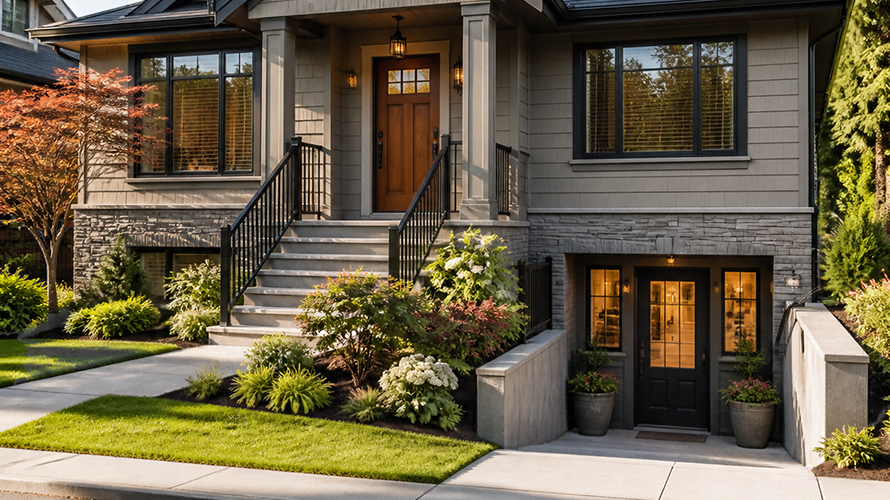
There are two main paths here, and lenders look at each one a bit differently. You can buy a property that already has a legal suite, or you can build one into the home you own now. Both can work, but the timing of when rent starts to count isn’t the same.
Buying with an existing suite usually gives you the quickest boost to your purchase approval. Adding a suite later tends to pay off at refinance or when you’re ready to move up. Your plans for the next three to five years should guide which route fits.
Buying a Property With an Existing Suite
When the suite is already rented, lenders often want the current lease and sometimes proof that rent is being paid. If it’s vacant, an appraiser may provide a market rent estimate instead. Some lenders also ask about past tenancy history, so gather what you can during the conditional period.
Keep in mind that a sitting tenant generally stays with the house in Ontario. You can’t simply ask them to leave because you’d rather choose your own renter. Knowing the lease terms before closing helps you avoid headaches later.
Adding a Suite to the Home You Already Own
If you’re staying put for now, a legal suite can raise both your income and your home’s value. Since January 15, 2025, federal rules let eligible homeowners refinance with an insured mortgage of up to 90% of the home’s “as improved” value to add a secondary suite, with the property value under $2 million and amortization up to 30 years. Lender participation and program details can change, so confirm current terms before you plan the reno.
A standard refinancing or a home equity loan can also fund the build if the insured program isn’t a fit. In some cases, a second mortgage may cover a short gap while permits and construction wrap up. Once the suite is legal and rented, that income can help when you’re ready to buy something bigger.
Risks to Weigh Before You Count on Rent
A mortgage helper only helps when it actually brings in money. Vacancies, late payments and repair bills land on you, not the lender. Being a landlord in Ontario also comes with real responsibilities under the Residential Tenancies Act.
- The federal stress test still applies, so rent supports your income but doesn’t replace it.
- Home insurance premiums may rise once you have a tenant.
- An illegal suite can lead to insurance, fire safety and resale problems.
- Rental income is taxable, and you’ll need to report it.
- Lender policies on rent can differ again at renewal or refinance.
None of this should scare you away from a great property. It simply means your budget should hold up for a month or two without rent coming in. A quick review of your full numbers can show how much cushion you really have.
How a Mortgage Broker in the GTA Can Help You Structure the Deal
Banks set their own rental income rules, and one lender’s no isn’t always the final answer. A mortgage broker in the GTA can compare add-back percentages, offset policies and paperwork requirements across banks, credit unions and alternative lenders in one go. That comparison alone may change how much home you can realistically shop for.
A broker can also help with the less obvious pieces of a move up. If you’re buying before your current home sells, bridge financing may cover the gap between closings. For files that don’t fit the big banks, private mortgages can sometimes act as a short term step while you build rental history or rebuild credit.
What Karla reviews on a basement suite file:
- Your income, debts and down payment
- The suite’s legal status and supporting documents
- Current or projected rent
- Which lenders treat rental income most favourably for your situation
- Pre-approval options before you start writing offers
First-Time Buyers: Can a Suite Work With 5% Down?
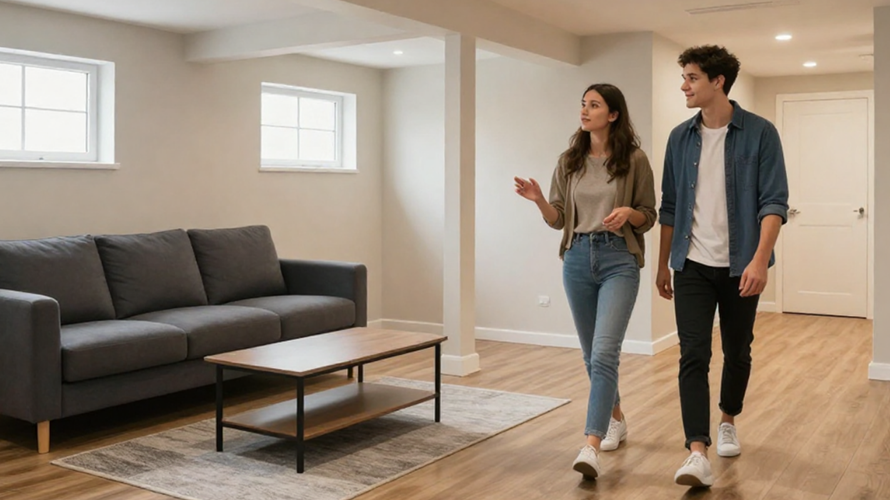
In many cases, yes. Owner occupied homes with one or two units can qualify for insured financing with a minimum down payment of 5% on the first $500,000 and 10% on the portion above that. The insured mortgage price cap rose to $1.5 million on December 15, 2024, which opened up more of the GTA’s detached and semi market to buyers with less than 20% down.
First-time buyers on insured mortgages can also choose a 30 year amortization, which lowers the monthly payment used to qualify. Pair that with up to 100% of the suite’s rent, and the gap between what you earn and what GTA homes cost starts to shrink. Our first-time home buyers page walks through qualifying, documents and closing.
Ready to talk it through? Call Karla at 647-456-6864 or start your mortgage review online.
Find Out What Your Basement Suite Could Do for You
A legal basement suite may be the difference between settling and finding a home your family can grow into. The right lender policy can turn that suite into real buying power. Getting the match right early saves time, stress and missed opportunities.
Karla Badillo is a mortgage broker in Toronto who works with buyers and homeowners across the GTA and Ontario. Book your mortgage review to see how rental income may affect your pre-approval, or learn more about Karla and her approach. All mortgages are subject to lender qualification and approval.
Ready to talk it through? Call Karla at 647-456-6864 or start your mortgage review online.
Frequently Asked Questions
Can I use basement suite income to qualify for a mortgage in Ontario?
Yes, many Ontario lenders will count income from a legal basement suite on your mortgage application. The share they use depends on the lender, the insurer and the number of units. For an owner occupied two unit home with insured financing, CMHC guidelines allow up to 100% of gross rent. Conventional lenders often use a lower percentage or an offset.
Does a basement suite have to be legal for the rent to count?
In most cases, yes, a suite needs to be legal or legally recognized before a lender will count its rent. Lenders and insurers want proof the unit meets building and fire code standards. Without permits or inspection records, the rent may be left out entirely. Some alternative lenders take a more flexible view, usually at a higher cost.
How much more can I borrow with a basement suite?
The extra borrowing room depends on the rent amount, the lender’s policy and your other debts. As a rough example, $2,000 a month counted at 100% adds $24,000 a year to your qualifying income. At 50%, it adds $12,000. A broker can run your exact numbers against several lenders’ rules.
Can rent count if the suite is vacant when I buy?
Yes, lenders can often use an appraiser’s market rent estimate when a suite is vacant at purchase. Some will want a signed lease that starts on or shortly after closing. Policies vary between lenders, so ask early and line up your paperwork during the conditional period.
Will a basement suite help if I'm self-employed?
Yes, rental income from a legal suite can strengthen a self-employed application too. It adds a second income stream that doesn’t rely on your business revenue. You’ll still need to document your business income the way the lender requires. Together, the two sources can make a tighter file easier to approve.
Does suite income matter when I renew my mortgage?
Suite income can matter at renewal if you switch lenders, borrow more or change your mortgage structure. A straight renewal with your current lender usually doesn’t require full requalification. If you’re shopping around, a mortgage renewal review can show if your rental income opens up better terms elsewhere.
Can I use the federal secondary suite refinance to build a basement unit?
Eligible homeowners may be able to refinance up to 90% of their home’s improved value to add a secondary suite. The property value must be under $2 million, and amortization can stretch to 30 years. Each lender applies its own approval criteria, and not every lender offers the product. Confirm current eligibility before signing a contract with a builder.
Is buying a home with a basement suite right for every GTA buyer?
Not always, because a suite works best for buyers who are comfortable being landlords and sharing the property. You trade some privacy and space for help with the mortgage. It’s also smart to make sure you could carry the payment without rent for a short stretch. For more general questions, browse our mortgage FAQs.